How We Select and Review Heritage Sites
Our database of 120+ reviewed sites is not a comprehensive list of everything Egypt contains — that would require a different type of publication entirely. Instead, we focus on the institutions and sites that offer the most rewarding experiences for the types of visitors we serve: culturally engaged travellers, academic researchers, school and university groups, and heritage professionals who want accurate, current, in-depth information. We include sites across the full range of visitor types, from the most famous (the Pyramids, the GEM) to the genuinely obscure (the Ptolemaic temple at Deir el-Medina, the Greco-Roman catacombs of Kom el-Shoqafa, the Monastery of St. Paul in the Eastern Desert).
We do not review sites we have not personally visited. Every entry in our database is based on at least one in-person assessment by a named team member. We revisit each site at least annually, and more frequently when significant changes are reported. Our field visits are conducted without advance notice to site management — we visit as members of the public to ensure we see exactly what any ordinary visitor would encounter.
Regions Covered in Our Database
Our current coverage spans all 14 of Egypt's governorates that contain heritage destinations accessible to international visitors. The distribution of reviews reflects genuine heritage density: the Greater Cairo region (Cairo, Giza, Helwan, and the Saqqara/Memphis corridor) accounts for approximately 35 reviews; Luxor Governorate for 28; Aswan Governorate for 18; Alexandria Governorate for 12; and the remaining governorates — including Fayoum, Minya, Asyut, Sohag, Qena, and the Sinai — account for the balance.
Underrepresented regions in published English-language heritage guidance — particularly Middle Egypt (Minya, Asyut, Sohag) and the Western Desert oases — receive particular attention in our database precisely because reliable current information is scarce. The Tomb of Petosiris at Tuna el-Gebel, the Monastery of the Virgin at Deir el-Muharaq, the Greco-Roman city of Hermopolis Magna, and the rock-cut temples of Merenptah and Seti I at Abydos all warrant far more visitor attention than they currently receive — and our guides aim to give potential visitors the confidence to make the logistics work.
Frequently Missed Sites We Recommend
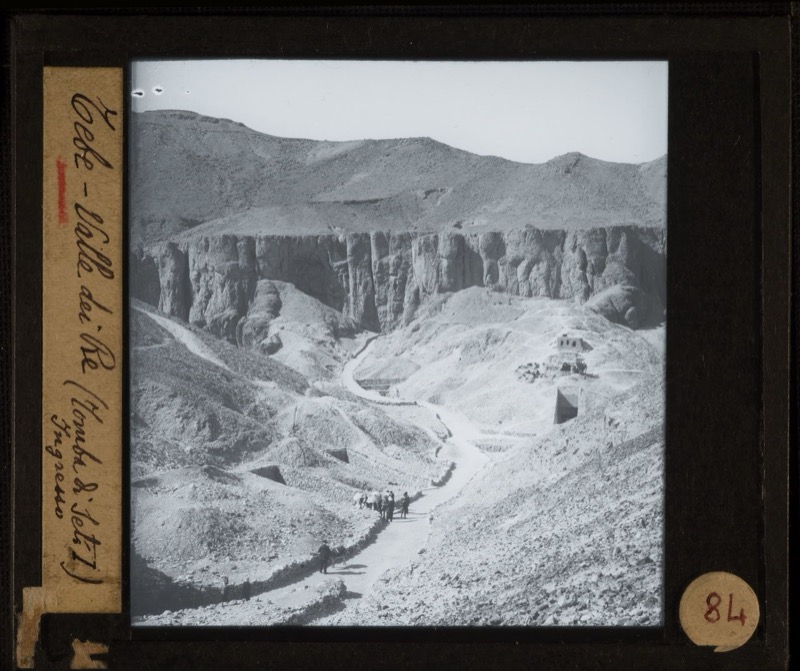
Visitors with limited time naturally focus on Egypt's most famous destinations, but our researchers consistently encounter sites of extraordinary quality that receive a fraction of the attention they deserve. The Tomb of Ramose (TT55) on Luxor's West Bank contains some of the finest relief carvings of the New Kingdom, executed in a transitional style that bridges the conventions of Amenhotep III and the radical departure of Akhenaten — yet it is visited by perhaps two percent of the travellers who enter the Valley of the Kings just two kilometres away. The Mortuary Temple of Seti I at Abydos, with its seven chapels each decorated in a distinct style and its mysterious L-shaped inner section known as the Osireion, is one of the most atmospheric monuments in Egypt; it is only 10 kilometres from the more frequently visited Temple of Seti I at Abydos proper. The Museum of Islamic Art in Cairo — recently reopened after extensive restoration — holds the world's largest collection of Islamic metalwork, ceramics, woodwork, and textiles outside Turkey. All three of these are covered in our full database with comprehensive access guides.
We actively update our "lesser-known recommendations" for each region in response to reader feedback and to recent changes in site access. Several sites that were effectively closed to visitors five years ago — due to excavation, security concerns, or administrative reasons — have since reopened, and we have been among the first to document the new conditions. If you are planning a return visit to Egypt having already seen the principal heritage sites, contact us for a consultation specifically focused on extending your experience into less-visited territory — this is one of our specialities and one that we find particularly rewarding to advise on.